
The day after tomorrow, Thursday 7 May, from 12 noon to 2 pm, a demonstration and sit-in will be held in Rome in memory of Amal Khalil, the Lebanese journalist killed in southern Lebanon by an Israeli airstrike. The march will set off from Piazza Capranica and proceed to Montecitorio. The initiative is organised by the National Council of the Order of Journalists, the National Federation of the Italian Press (FNSI) and many other associations that have decided to join the cause.
This is not the first demonstration in her honour: on Tuesday 28 April, a similar demonstration had already taken place in Beirut, outside the ESCWA headquarters, to denounce the killings of journalists in southern Lebanon and pay tribute to Amal. Dozens of journalists gathered at 11 am – 10 am in Italy – in an atmosphere of mourning and anger. The victim’s brother and sister were present, as well as a representative of the pro-Hezbollah daily Al-Akhbar, for which the journalist worked.
Who was Amal Khalil
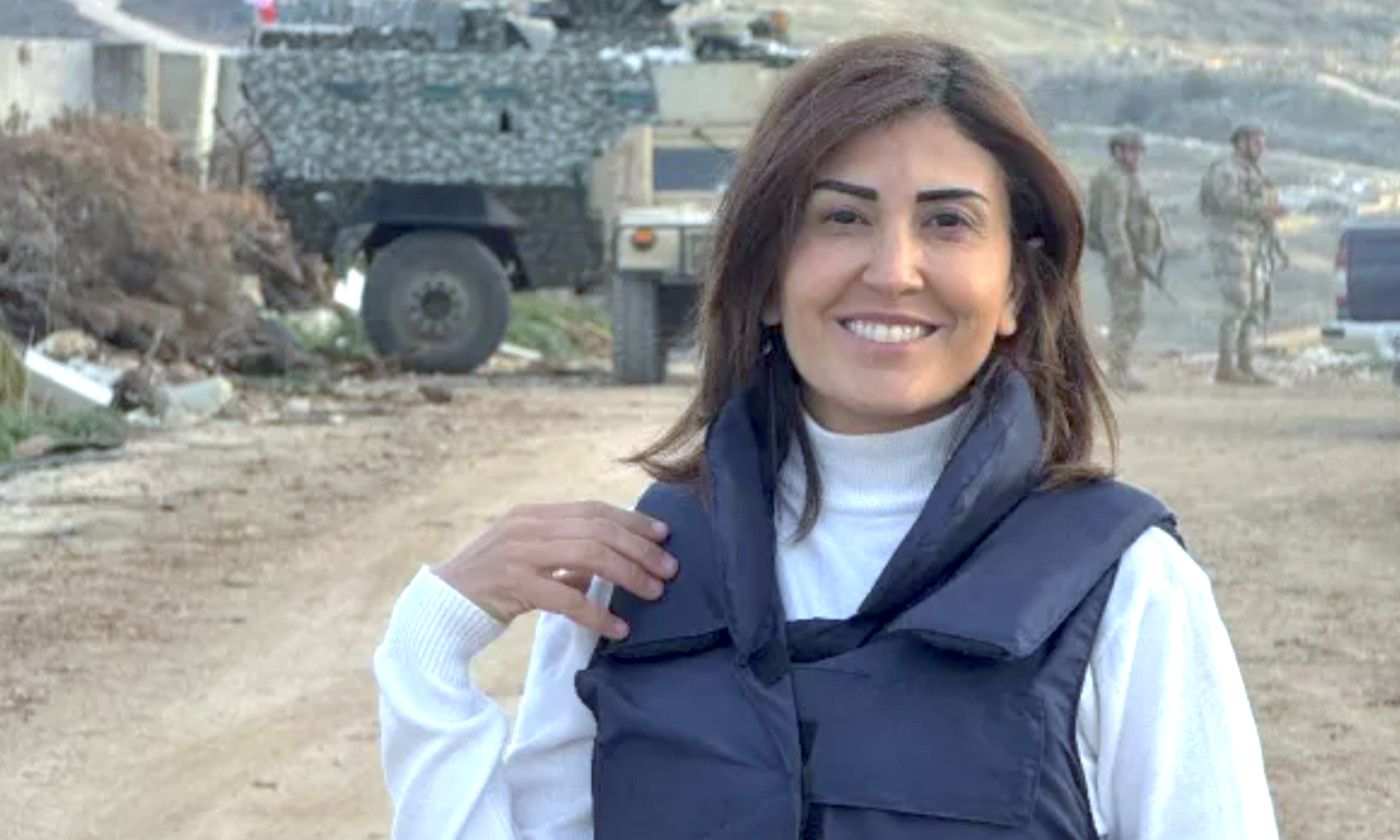
Amal Khalil, a Lebanese journalist and reporter for the daily newspaper Al-Akhbar, was killed on 22 April 2026, aged 42, by an Israeli Defence Forces airstrike in southern Lebanon, whilst covering the war between Israel and Hezbollah. Her body was found by the Lebanese army and the Red Cross around six hours after she had been trapped under the rubble of the building where she had taken shelter. Reporters Without Borders (RSF) condemned the killing in the strongest possible terms, describing it as a war crime: targeting a civilian — a media professional — is completely unjustifiable.
A death that could have been avoided
Amal Khalil, originally from southern Lebanon and a respected journalist with years of experience in the field, was on assignment in the town of al-Tayri alongside her colleague, freelance photographer Zeinab Faraj. When the vehicle travelling ahead of their car was hit by an initial Israeli airstrike — killing the two civilians on board — the two journalists managed to take shelter in a nearby building.
Almost two hours later, a second Israeli airstrike hit the three-storey building where they had taken refuge. Lebanese rescue workers managed to evacuate Zeinab Faraj, who was seriously injured, but further Israeli airstrikes prevented them from reaching Amal in time.
Meanwhile, Amal was sending voice messages to her family to reassure them, whilst calling for help from rescue workers, the newspaper’s editors and even the UN and UNIFIL. Help did not arrive in time: civil defence teams were unable to access the area without authorisation from the Israeli army. From 17:00 Paris time, RSF and other NGOs publicly alerted the Israeli authorities and their allies to the situation of the two journalists trapped in the building. Contacted urgently by RSF to halt the raids and allow rescuers to reach the journalist, a spokesperson for the Israeli army replied at 17:30 with a terse: “I’ll look into it.” Amal’s lifeless body was found six hours later.
What took place was a classic “double tap strike” — a technique already widely documented in Gaza and Lebanon — in which successive attacks strike the same areas, preventing rescue efforts: not only a second raid on the building where the journalists had taken refuge, but also an attack on the ambulance that had arrived, forcing it to leave the scene. Amal’s body was recovered only after 11.00 pm, following hours of digging through the rubble with an excavator.
Pre-emptive threats and impunity
Amal was no stranger to intimidation. During the 2024 war, she had already received threats from an Israeli media figure, who warned her to leave Lebanon “if she wanted to keep her head on her shoulders”. When contacted after her death, the man showed no remorse.
Amal’s brother, who attended the funeral, stated emphatically that if rescue efforts had been authorised immediately after the first attack, his sister would still be alive. He pointed out that journalists are protected by international humanitarian law, but that this protection has proved to be entirely meaningless.
The Israeli army has stated that it does not target journalists, but the figures tell a different story: dozens of journalists killed in Gaza and several in Lebanon during the conflict. In a previous case, the Israeli army had released a photo — later admitted to have been doctored — to claim that one of the journalists killed was a member of Hezbollah’s elite forces. A recurring attempt to discredit local reporters by linking them to armed groups, without any evidence.
On the legal front, options remain dramatically limited: Israel is not a member of the International Criminal Court, and the only tools available are complaints to the UN and international diplomatic pressure, such as the suspension of arms supplies. A situation of virtual impunity which, in effect, allows these incidents to recur.
Amal’s legacy
At her funeral, her colleagues carried her bulletproof vest and reporter’s helmet in a procession over her coffin, calling her “the flower of the South”. Those who knew her describe her as a dedicated and principled journalist, who bore the enormous burden of reporting on the war in her own country with great dignity and courage. She had gone to southern Lebanon specifically to document the ongoing destruction — including that perpetrated during the ceasefire — and it was in the course of that work that she lost her life. Her colleagues have vowed to carry on her work. A promise made necessary by a death that should never have happened.
